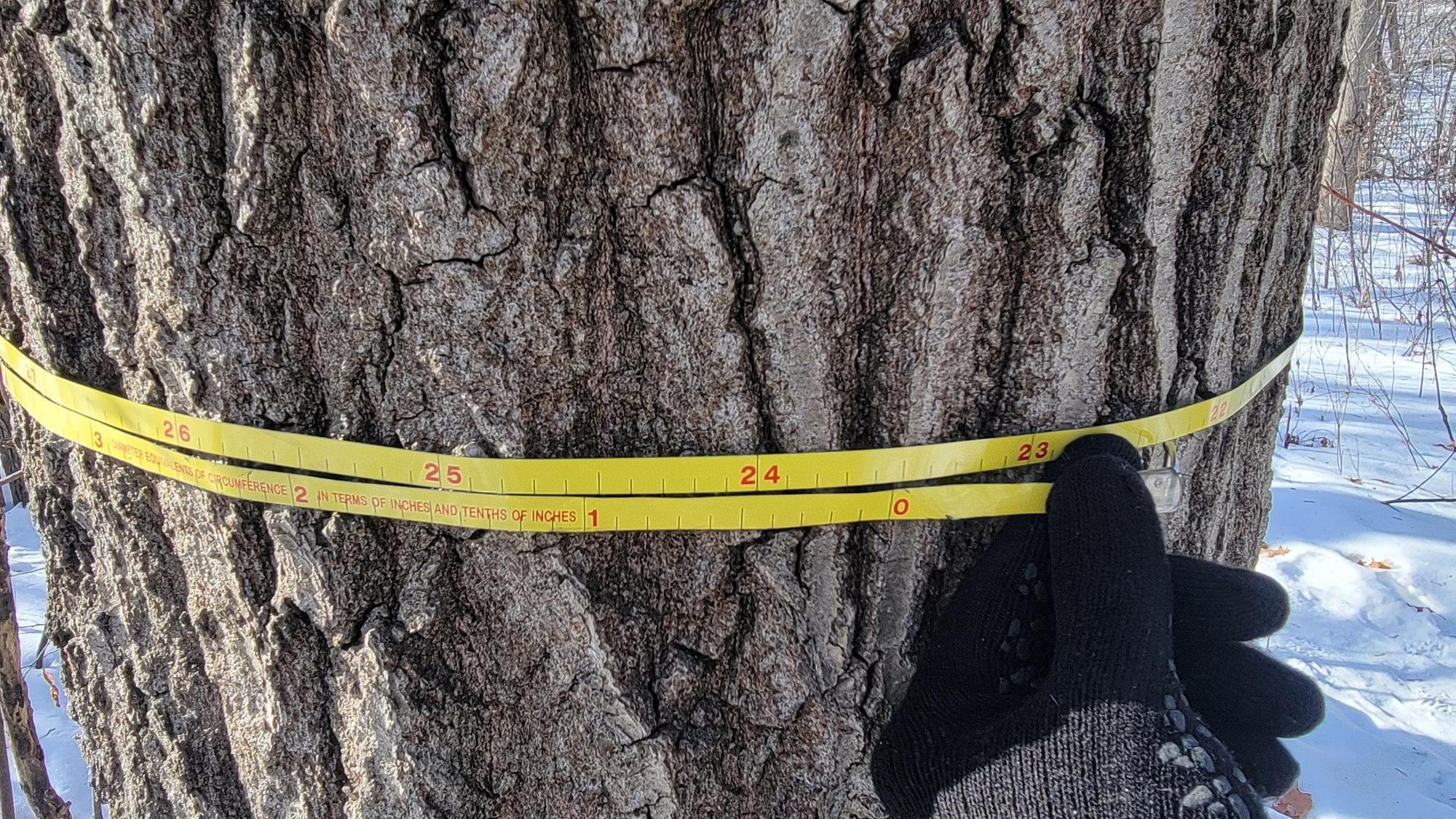
When I was in Minnesota, I organized the Tree and Woodland Carbon Capture Challenge. The Challenge was a pandemic-friendly activity that asked Minnesotans to go outside and measure trees and woodlands to observe how much carbon they sequester over a year. You can view the data and code from the Challenge here.
The audience that participated in this activity included homeowners and private woodland owners with a love for trees. In 2020, 26 people measured an individual tree and typed their measurements into a Google Form answering the question “What is the diameter of your tree, measured in inches?”
Here are the responses I received:
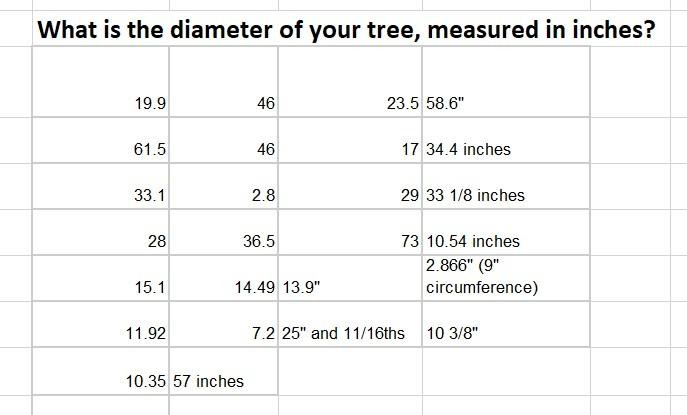
Anyone that’s worked with data immediately sees the problems I was faced with. I received answers that mixed decimals and fractions, had different significant digits, and mixed character and numeric values. Needless to say, the data were messy, and I needed to spend time cleaning them up.
The take-home message is to be specific about how you ask for data and give good examples of what you expect. I didn’t do this, and while the quality of the data were good, it took considerable time to clean and reorganize the data.
I could have used data validation features in the Google Form I provided. I could have gave an example like “Measure and enter data for your tree to the nearest tenth of an inch, for example, enter ”10.7” for a tree that is 10.7 inches in diameter at breast height.”
Audience matters too. If I asked professional foresters the same question, I would have likely received a data set of diameters measured to the nearest tenth of an inch, without me asking specifically for it.
I often use this example as a reminder to know your audience when asking for data. Automating a data analysis workflow by using data validations can benefit the data analyst and lead to fewer problems when data are ultimately used to make decisions.
Here’s a checklist to help you before you ask for data from others:
Who will be collecting the data? Understand their own framework and experiences in collecting and delivering these kind of data.
Provide a worked example. Good examples can be copied, or at the very least can provide a framework for others to follow.
Use validation features. Most online data forms like Google Forms and Microsoft Forms have these. Dropdown lists in Excel can also be customized to only accept values that are within reason.
Define units explicitly. Especially in forestry where we often mix English and metric units, explicitly stating the units you’re interested in can lead to fewer headaches down the line.
First, collect the data yourself. How we think the data collection will go and how it actually goes are two different things. If you develop a protocol or standard operating procedure related to data collection, try it out yourself first to eliminate any confusions or inconsistencies in the protocol. This is where AI tools could help, too.
Happy data collecting!
–
By Matt Russell. Subscribe to our monthly email newsletter for data and analytics trends in the forest products industry.